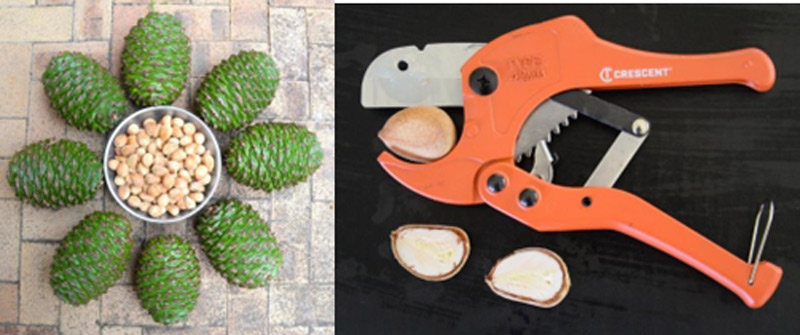
The summer of 2026 has been a bumper season for the production of Bunya Pine cones (generally there is a peak about every 3 years). In my yard in Wights Mountain, a Bunya tree that I planted in 2013 produced its first crop in late January, with cones littering the ground in my lower rainforest area after a recent storm. I am very glad that I wasn’t weeding underneath the trees when the cones came crashing down (each weighs several kilos)! This is a timely reminder for everyone to check the Bunya trees in your yard and area (although most cones have probably already dropped).
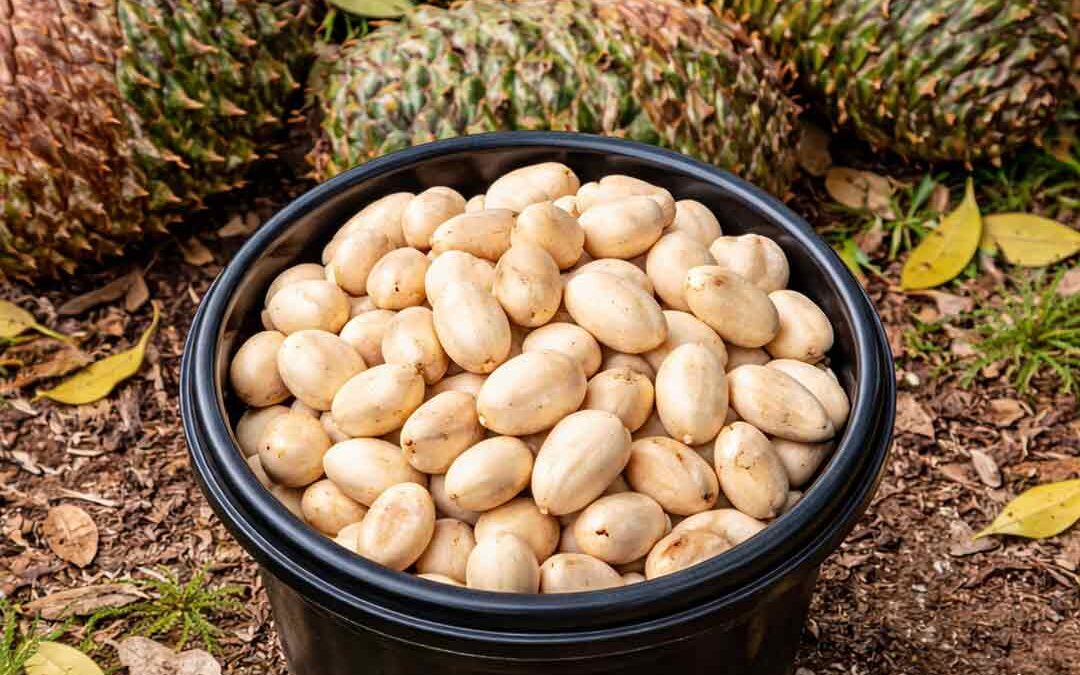
After about a week or two, the fallen cones begin to split into individual segments from which the ‘nuts’ (technically they are a seed, not a nut) need to be shucked. This can be done by hand by bending each segment (beware of the spike) to remove the nut. Bunya nuts can be eaten raw (they are very starchy), but more often are eaten cooked, whether by boiling for 20 to 40 minutes or roasting after nicking the tip. Cooking causes the pointed end of the hard seed case to split, and you can then use a very sharp knife to cut the case in half vertically. However, it is much safer to use a ratchet pipe cutter (this can be done with raw nuts too): it may take slightly longer, but you get to retain all your fingers, which are at serious risk with a knife or guillotine. This technique is recommended by Indigenous chef Aunty Dale Chapman from My Dilly Bag at Forest Glen on the Sunshine Coast (a great place to shop for Australian native bush foods). The kernels, which become waxier after cooking, can then be processed by chopping or blending for use in desserts, savoury dishes and spreads. They can also be milled further to create some flour to make dough (some people dehydrate them before this step).
Bunya nuts are very nutritious and have been an important food source for Queensland Indigenous communities for thousands of years. According to Dr Jaqueline Moura Nadolny from UQ’s Queensland Alliance for Agriculture and Food Innovation, Bunya nuts are low in fat, high in fibre, gluten free and contain all the essential amino acids, protein and folate.
If you’d like to get some recipes for Bunya nuts or learn more about Australia’s many other amazing bush foods, consider joining the Queensland Bushfood Association (https://qldbushfood.org.au/), which costs just $10 per family per calendar year.
Peter Storer